
Designing Calm — The Psychology of Minimalism in Wellness Branding
At Larima Studio, we help wellness and creative businesses across the UK develop brand identities that feel calm, intentional, and professional. Our work combines the principles of minimal design with a focus on client experience — ensuring your brand communicates trust and clarity while reflecting your unique values. Whether you are a yoga teacher, therapist, or small business owner, we believe thoughtful design can create a lasting impact on how your clients connect with you.
Why Calm Design Matters
Minimalism in branding isn’t just a visual preference — it’s a psychological choice. For the UK’s wellness and mindful business sector, design is an emotional bridge between what your brand says and how your audience feels.
If you’ve read my previous post — The Benefits of Minimalism in Branding — we explored the practical side: space, simplicity, structure. This time, we’re going deeper.
We’ll look at the psychology that makes minimalism so effective for wellness brands — and how “designing calm” helps audiences trust, exhale and connect.
1. How Our Minds React to Simplicity
Our brains crave order. When faced with clutter — visual, verbal, or spatial — cognitive load rises. It takes more effort to make sense of what we see.
Minimalism alleviates that burden. By simplifying colour palettes, spacing, and hierarchy, you reduce noise and give the mind a resting place.
This aligns with Hick’s Law, which states that the more choices we present, the longer it takes for someone to decide. In branding, less choice equals less friction — the experience feels lighter, calmer, and more intuitive.
In a world of sensory overload, minimalism restores focus. It’s not about absence — it’s about attention.
2. The Psychology Behind “Calm” Design
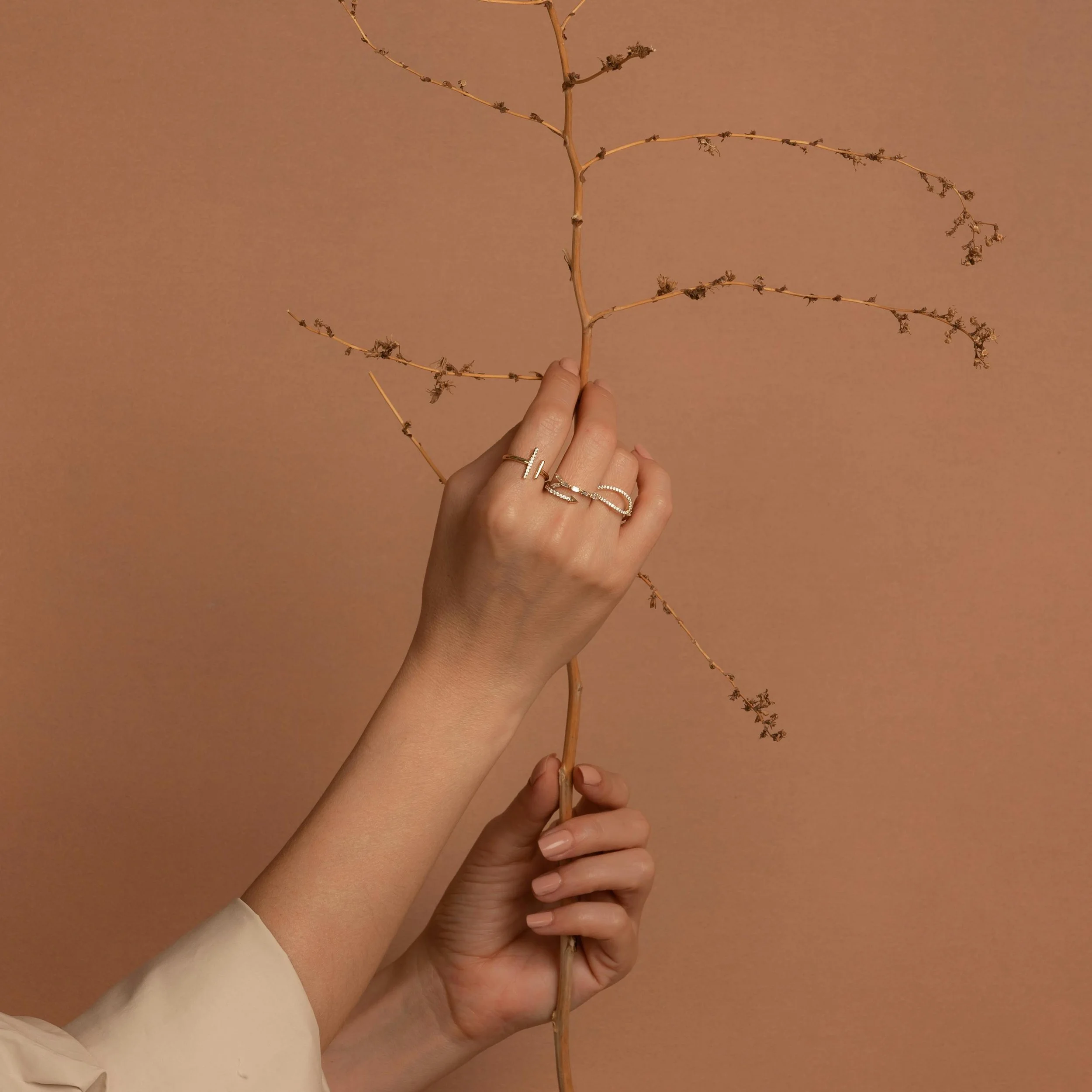
Design doesn’t just decorate; it communicates emotion. Colours, forms and spacing all affect the nervous system in subtle ways.
Whitespace triggers feelings of openness and safety.
Neutral or nature-inspired tones (sage green, sand, stone) lower perceived tension.
Soft geometry — gentle curves and balanced alignment — create harmony, not aggression.
In the wellness sector, where emotional safety and trust are vital, these choices are more than aesthetic. They’re psychological cues of stability and presence.

3. Minimalism and Human Needs: What Research Says
Scientific studies increasingly support what designers intuitively know: a simpler environment fosters well-being.
Recent research into minimalism and well-being shows that voluntary simplicity — the deliberate reduction of excess — supports autonomy, competence and relatedness, the three core psychological needs identified in Self-Determination Theory (Deci & Ryan, 2000).
Autonomy — feeling free from clutter and external pressure.
Competence — confidence in one’s ability to choose what truly matters.
Relatedness — meaningful connection to others and to purpose.
A 2020 qualitative study, Towards a Theory of Minimalism and Well-being by Lloyd et al. (International Journal of Applied Positive Psychology), found that minimalists consistently described greater mental space, emotional clarity and fulfilment of those three needs.
Similarly, a 2023 article in Frontiers in Psychology, Goodbye Materialism: Exploring Antecedents of Minimalism (Jain et al.), confirmed that adopting minimalist values was associated with higher psychological well-being, self-awareness and life satisfaction.
For designers and brand owners, this matters: your audience is unconsciously drawn to environments — digital or physical — that support these same needs. A minimalist brand feels emotionally safe because it mirrors the state of mind people want to inhabit.
4. Minimalism in Practice — UK Wellness Brand Examples
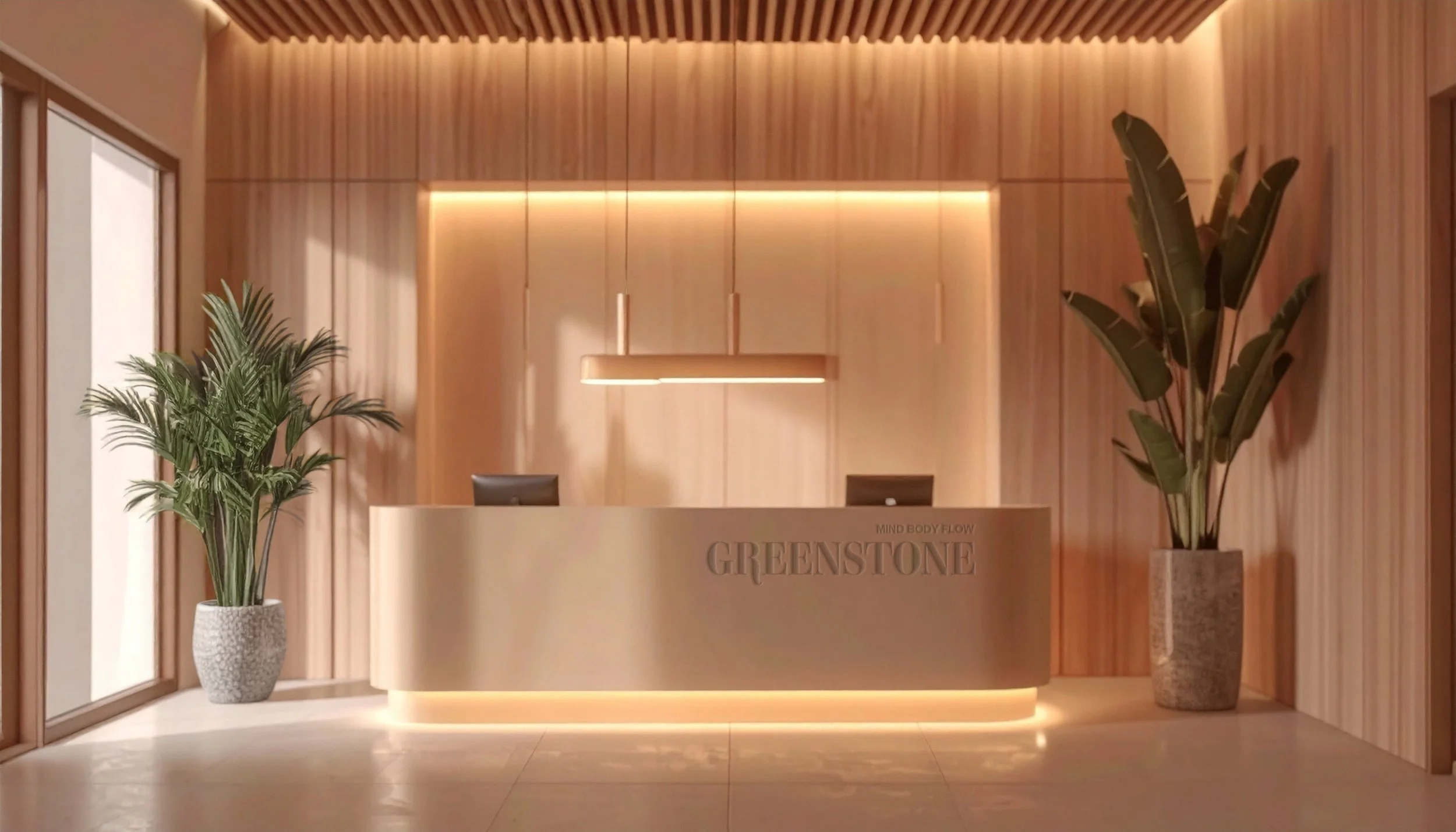
Let’s translate psychology into tangible design. Here are some example scenarios British wellness brands use minimalism to evoke calm:
Brand 1 : Calm Retreats UK Brand 1
Their brand identity uses muted earth tones, an airy layout, and soft sans-serif typography. Whitespace frames every image like a deep breath — each section invites pause.
Brand 2 : Aline Pilates London
Instead of showing every class, they highlight just one story — a single student journey. By reducing choice, they build emotional focus and authenticity.
Brand 3 : Verdant Wellness Nutrition
Their packaging applies a single leaf icon and monochrome label, with generous negative space. The restraint implies trust, professionalism and clarity — far more powerful than a crowded label.
Minimalism here isn’t cold. It’s confident. It trusts the viewer to fill in the silence.

5. Avoiding the “Too Minimal” Trap
While minimalism offers clarity and calm, it can easily tip into emptiness if applied without warmth or intention. True minimal design is not about taking everything away; it’s about leaving only what feels essential — and human.
If a brand feels sterile or overly stark, introduce tactile elements such as natural textures, organic photography, or subtle gradients. These soften the visual language and bring a sense of life to the design. When navigation becomes too sparse or abstract, add gentle cues and hierarchy — soft lines, hover effects, or thoughtful typography can guide users without breaking the calm.
A brand can also lose its emotional resonance if it becomes too neutral. To counter this, weave in personality through voice, story and tone, or include a warm accent colour — something that feels like your brand’s heartbeat. And when minimalism starts to look generic, return to your core intention. Let your purpose inform each visual decision so your simplicity feels distinctive rather than empty.
The goal isn’t to remove emotion but to refine it. Calm design should feel alive — composed yet compassionate, simple yet sincere.
True calm design never feels empty; it feels intentional.

6. Applying Psychological Minimalism in Your Brand
Here’s how you can use this research in your own wellness business or creative studio:
Audit your visuals — Remove any element that doesn’t serve a clear message or feeling.
Design for attention, not distraction — Fewer focal points create stronger emotional connection.
Use colour psychology — Green signals growth and calm; yellow brings optimism; neutral tones evoke trust.
Prioritise typography hierarchy — Let scale and spacing create rhythm and rest.
Craft calm interactions — Gentle animations, soft scroll transitions, and slower fade speeds can soothe the digital experience.
Align design with brand intention — Each choice should echo your brand’s purpose and values.

7. Why It Matters for the UK Wellness Industry
Across London, Bristol, Edinburgh and beyond, yoga studios, retreat organisers and wellness hotels increasingly use design psychology to differentiate themselves. Audiences don’t just want information — they want to feel better when they interact with a brand.
Calm design acts as an invitation: Come in, slow down, you’re safe here.
For UK wellness entrepreneurs, psychological minimalism communicates your brand’s values without shouting them. It’s empathy made visible.
Final Thoughts
Minimalism, at its best, is emotional intelligence made visible.
It respects how the mind works — conserving energy, reducing friction, creating ease.
When your brand communicates with restraint and presence, it doesn’t compete for attention; it earns trust.
And in the wellness industry, where sincerity and safety matter more than spectacle, that is what leaves a lasting impression.
So next time you’re refining your brand identity or website, ask yourself:
Does this design help the mind rest — or does it demand more of it?
Design calm. Design clarity. Design trust.
References
Lloyd, K., et al. (2020). Towards a Theory of Minimalism and Well-being. International Journal of Applied Positive Psychology. PDF Link
Jain, A., et al. (2023). Goodbye Materialism: Exploring Antecedents of Minimalism. Frontiers in Psychology. Full Text
Deci, E.L. & Ryan, R.M. (2000). Self-Determination Theory and the Facilitation of Intrinsic Motivation, Social Development, and Well-being.American Psychologist.